

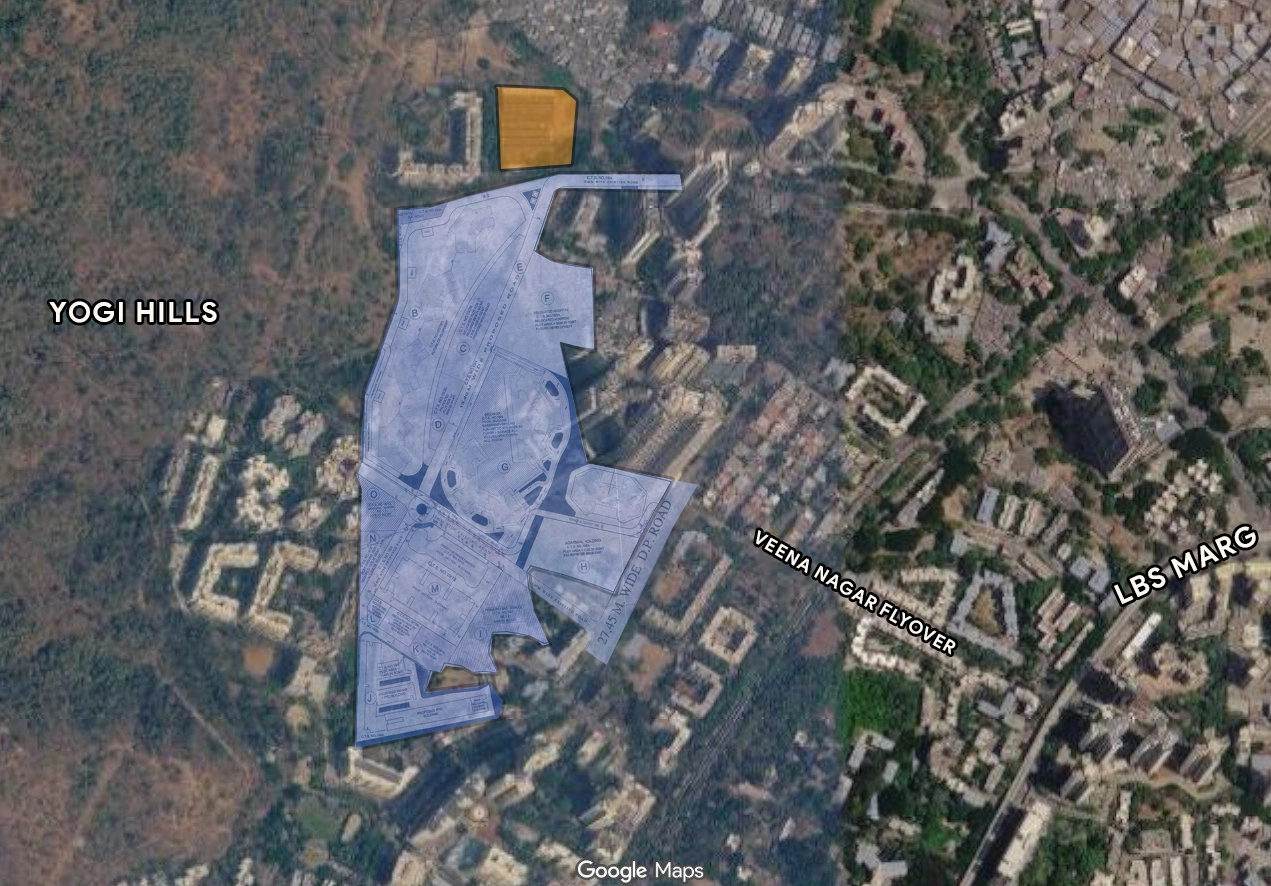
What Can Prestige Build on newly acquired Land in Mulund?
When Large Developers Buy Land, They Aren’t Just Buying Area—They’re Buying Future Development Potential
In July 2026, Prestige Mulund Realty Pvt. Ltd., an arm of Prestige Estates Projects Ltd., acquired a 9,497 sq.m. (2.35-acre) land parcel in Mulund West for ₹110.75 crore. The consideration included ₹80 crore in cash and the balance through apartments and parking spaces within The Prestige City.
The timing was particularly noteworthy.
Just weeks earlier, Prestige had announced Forest Hills – Phase 2 within The Prestige City, Mulund, with an estimated Gross Development Value (GDV) of ₹2,200 crore, comprising approximately 500 premium residences across Wings C and D. According to the project’s Phase 2 disclosure, Forest Hills is being developed on a total land area of 27,863.63 sq.m., with the current launch covering the remaining 24,996.27 sq.m. and a launch built-up area of 42,728.93 sq.m.
For most people, the story ends there.
For a developer evaluating land acquisitions, however, that is where the real questions begin.
- Which DCPR 2034 scheme can unlock the highest value?
- Are there planning constraints that affect development?
- Is adjoining land automatically more valuable?
- Does maximum FSI always translate into the best project?
To answer these questions, we analysed the recent Prestige Mulund land acquisition using Archonet’s LandWise.

Part 1 — Understanding the Strategic Importance of the Prestige Mulund Land Acquisition
At first glance, the acquisition appears straightforward.
Prestige already owns one of Mumbai’s largest integrated townships in Mulund. Acquiring an adjoining parcel naturally strengthens its land bank.
However, this acquisition is not simply an extension of Forest Hills.
The newly acquired parcel:
- has a separate CTS number,
- is separated from the township by an existing public road,
- currently falls outside the approved township boundary.
Therefore, it would be premature to assume that the land can simply be amalgamated with the existing township.
Instead, the acquisition should be viewed as a strategic land banking decision.
Why would a developer acquire adjoining land?
There are several commercial reasons:
Future optionality. As regulatory frameworks evolve, adjoining parcels may create opportunities for integrated planning or future expansion.
Protection of township character. Controlling neighbouring land reduces the possibility of incompatible developments immediately adjoining a premium township.
Scarcity. Large contiguous land parcels around Yogi Hills are increasingly difficult to assemble. Securing strategic parcels today can provide flexibility for future product launches.
Brand continuity. Even if developed independently, a premium residential project adjoining The Prestige City benefits from the township’s established identity, infrastructure and market perception.
For developers, strategic land banking is often less about today’s approvals and more about preserving tomorrow’s options.

Part 2 — The Feasibility Analysis
Land acquisition decisions are ultimately driven by regulations, not headlines. Running the parcel (land recently acquired by Prestige Mulund Realty from Shamvik Glasstech and General Glass Company) through LandWise revealed multiple applicable development schemes under DCPR 2034.
At first glance, one might conclude that a 5.0 FSI scheme is automatically the best option.
In reality, feasibility is considerably more nuanced.

Why Scheme 33(11) Appears the Strongest Candidate
Although Regulations 33(4) and 33(13) provide a higher theoretical FSI, several practical considerations suggest that Scheme 33(11) deserves closer attention.
First, a 4.0 FSI already delivers nearly 38,000 sq.m. of permissible built-up area before fungible FSI, representing a substantial development potential.
Second, the surrounding urban context is important. Adjacent redevelopment projects in the precinct have largely followed redevelopment-oriented planning provisions, making Scheme 33(11) more consistent with the existing development fabric.
Third, developers optimise for risk-adjusted returns, not simply the highest permissible FSI. Schemes offering greater planning certainty, fewer implementation complexities and alignment with the intended product often outperform those with higher theoretical buildability.
Alternative Scenarios
LandWise also identifies Scheme 33(20B) as a viable alternative.
Interestingly, it generates the same maximum FSI and total permissible BUA as Scheme 33(11), although the authority share remains identical.
The combination of 30(A) with 33(20B) is particularly noteworthy.
While maintaining the same 4.0 FSI and built-up area, the authority’s share is substantially lower than in a standalone 33(20B) scenario. Whether this combination is ultimately available depends on site-specific eligibility and planning approvals, but it demonstrates why scheme comparison should be undertaken before land acquisition rather than during project design.
Constraints That Headlines Don’t Mention
Perhaps the most valuable insight from the LandWise evaluation wasn’t an FSI figure at all.
The platform flagged two planning considerations that materially influence feasibility:
- Environmental Sensitive Zone (ESZ) caution, requiring additional attention during project planning.
- DP Road setback, which may affect the effective developable envelope, tower placement and site efficiency.
Neither of these planning constraints featured in public announcements, yet both have the potential to influence project economics and design decisions significantly.
This highlights an important lesson: the best land deals are not identified by the highest FSI alone, but by understanding the complete regulatory picture.
Part 3 — What Developers Can Learn
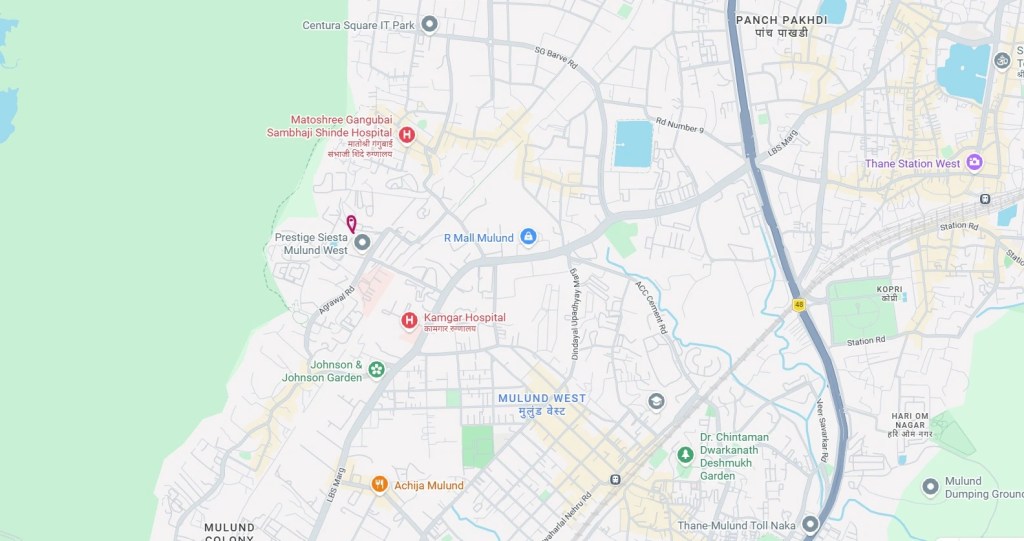
Prestige’s acquisition illustrates how experienced developers think beyond the transaction value.
The ₹110.75 crore purchase price is only the first number in the feasibility equation.
The more important questions include:
- Which development scheme is applicable?
- How much built-up area is actually achievable?
- What premiums and authority obligations will apply?
- Are there environmental overlays or road reservations?
- Which regulatory scenario produces the strongest commercial outcome?
These questions determine whether a site becomes a successful project—or an expensive land bank with limited development flexibility.
For business development teams, the ability to answer these questions early can significantly improve acquisition decisions, shorten due diligence cycles and strengthen negotiations.
The Archonet Perspective
Every land parcel has multiple development possibilities.
The challenge is identifying the one that creates the greatest value before committing capital.
LandWise enables developers to evaluate:
- Applicable DCPR 2034 schemes
- Comparative FSI across regulations
- Premium and authority obligations
- Scheme-specific built-up area
- Planning constraints, cautions, reservations, buffers
- Preliminary development potential within minutes
Instead of relying on assumptions, developers can compare multiple regulatory scenarios side by side and understand how each affects project feasibility.
Because in real estate, the most valuable land is not always the parcel with the highest FSI.
It is the parcel where regulatory potential, planning constraints and commercial viability align.
To understand feasibility of Naman Xana, Worli project, click here.